Loading...

Most American students discover that writing a well-organized essay is far more challenging than they expect. Without a clear structure, even strong ideas can lose impact and direction. Studies show students with outlines finish drafts 30 percent faster and with fewer revisions. Learning how to plan an essay outline not only streamlines the writing process but also builds confidence at every step, offering a proven path from brainstorming to a compelling final argument.
| Point | Details |
|---|---|
| Purpose of Essay Outlines | Outlines serve as strategic roadmaps that enable writers to organize thoughts, improve argument structure, and save time during the writing process. |
| Types of Outline Formats | Different outline formats (alphanumeric, full sentence, decimal) cater to various writing needs and complexities, aiding in clear organization of ideas. |
| Influence on Essay Structure | Outlines help ensure logical progression and coherence by mapping out the relationship between the thesis and supporting arguments. |
| Practical Advantages | Using outlines reduces writing and revision time, facilitates research, and enhances overall essay structure and clarity. |
An essay outline serves as a strategic roadmap for academic writing, transforming scattered thoughts into a coherent narrative. Understanding essay outlines enables writers to craft structured, logical arguments that effectively communicate their ideas.
At its core, an outline is a direct and clear representation of your essay's structure, revealing what each paragraph will contain and how different points interconnect. Much like a detailed travel itinerary, an outline helps writers navigate complex ideas by providing a clear path from introduction to conclusion. Academic writing demands precision, and an outline allows you to manipulate and organize information before diving into full paragraph development.
The primary purpose of creating an essay outline extends beyond mere organization. By mapping out your argument in advance, you save significant time during the writing and revision process. When developing argument structures, writers can identify potential logical gaps, ensure smooth transitions between sections, and maintain a focused narrative flow. This preparatory step transforms writing from a potentially chaotic process into a strategic, intentional exercise in communication.
Key benefits of essay outlines include:
Essay outlines come in several structured formats, each designed to help writers organize their thoughts and arguments effectively. Essay format strategies play a crucial role in academic writing, providing writers with systematic approaches to presenting complex ideas.

Traditionally, academic writing recognizes multiple outline types. Composition experts identify three primary outline formats: alphanumeric, full sentence, and decimal. The alphanumeric outline uses a hierarchical system combining Roman numerals, capital letters, Arabic numerals, and lowercase letters to organize information systematically. Full sentence outlines require complete sentences at each level, offering a detailed blueprint for the essay's structure. Decimal outlines employ decimal notation to demonstrate how each outline level connects to the broader argumentative framework.
Writers can choose between two fundamental outline approaches: topic and sentence outlines. Topic outlines utilize concise phrases and work best when ideas can be flexibly arranged. Sentence outlines, which incorporate complete sentences, prove more effective for complex, nuanced arguments requiring detailed elaboration. The choice depends on the essay's complexity, research depth, and specific academic requirements.
Key characteristics of different outline formats include:
Alphanumeric Outline
Uses hierarchical numbering system
Provides clear visual organization
Flexible for various essay types
Full Sentence Outline
Includes complete sentences at each level
Offers more detailed preview of essay content
Ideal for complex argumentative essays
Decimal Outline
Uses decimal notation (1.0, 1.1, 1.2)
Shows precise relationships between sections
Helpful for technical and scientific writing
Essay outlines fundamentally transform the writing process by providing a strategic blueprint for argument construction. Paragraph organization techniques help writers create coherent and logically structured academic papers that effectively communicate complex ideas.

Standard American argumentative essay structures typically follow a predictable yet powerful framework: an introduction presenting the main point (thesis), followed by body paragraphs supporting sub-points, and concluding with a synthesizing summary. An outline acts as a critical navigational tool, ensuring each section connects seamlessly and contributes meaningfully to the overall argument. By mapping out the essay's skeleton before writing, authors can identify potential logical gaps, balance argument distribution, and maintain a clear, purposeful narrative flow.
The structural influence of outlines extends beyond simple organization. Each component of the outline serves a strategic purpose in building a compelling academic argument. The thesis statement functions as the central argument, while topic sentences for each paragraph represent specific supporting claims. This systematic approach allows writers to critically evaluate their argument's strength, ensuring that every paragraph adds substantive value and moves the discussion forward. Writers can strategically arrange and rearrange outline elements to optimize logical progression and rhetorical impact before committing to full draft composition.
Key structural benefits of essay outlines include:
Essay outlines transform the writing process from a potentially chaotic endeavor into a structured, strategic approach. Essay writing techniques enable writers to navigate complex academic writing challenges with precision and clarity.
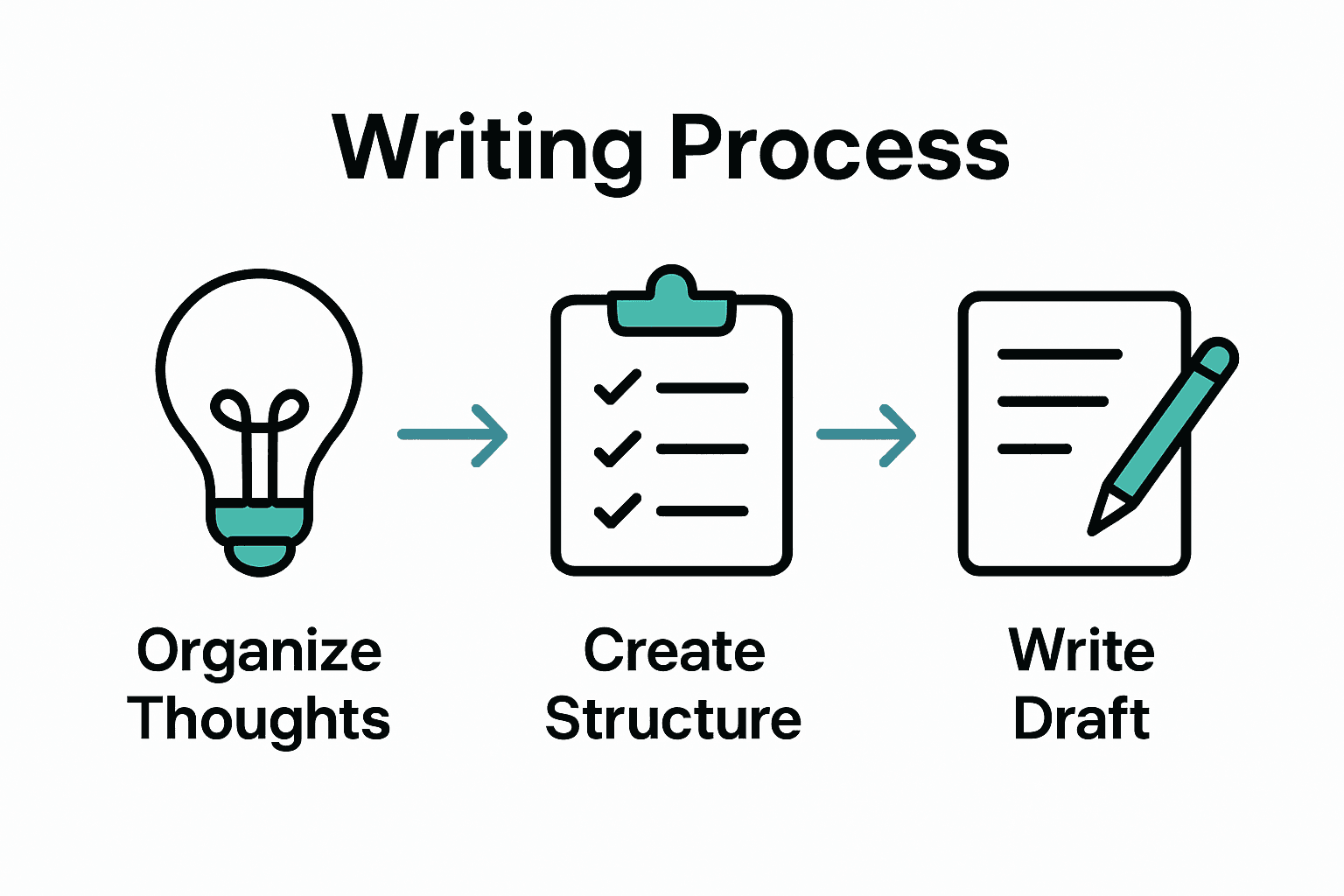
Academic writing experts recognize outlining as a vital part of the essay planning process. It provides writers with a unique opportunity to manipulate ideas easily without drafting complete paragraphs, allowing for flexible thought exploration and logical connection of information. By creating a preliminary map of the essay, writers can understand how different elements support the central thesis, ensuring a cohesive and compelling argument.
The practical advantages of using outlines extend far beyond initial planning. Detailed preparation strategies demonstrate that comprehensive outlines significantly reduce time spent on revisions. Writers can identify potential weaknesses in reasoning, balance argument distribution, and streamline the editing process before investing substantial time in full draft composition. This proactive approach minimizes structural rewrites and helps maintain a clear, focused narrative throughout the writing process.
Key practical benefits of using essay outlines include:
Essay outlining requires strategic thinking and careful planning to avoid common academic writing traps. Comparison essay outline strategies help writers navigate potential challenges in developing structured arguments.
Academic preparation techniques reveal that writers frequently stumble by failing to comprehensively consider their essay's core purpose and information presentation. The most effective outlines serve as dynamic tools for connecting ideas, critically selecting the strongest arguments, and rigorously evaluating available evidence. Writers must approach outlining as an active process of intellectual exploration, not a passive administrative task.
Thesis development strategies highlight another critical pitfall: creating an outline without a well-developed working thesis. A robust thesis statement acts as the foundational anchor for the entire essay, guiding the selection and arrangement of supporting arguments. Writers should invest time in brainstorming and research before solidifying their thesis, ensuring that the outline reflects a clear, coherent central argument.
Common outlining pitfalls and their strategic solutions include:
Premature Drafting
Pitfall: Starting to write before conceptualizing the argument
Solution: Develop a comprehensive outline first
Weak Thesis
Pitfall: Unclear or unfocused central argument
Solution: Refine thesis through research and critical thinking
Imbalanced Arguments
Pitfall: Uneven development of supporting points
Solution: Ensure each section receives proportional attention
Lack of Evidence
Pitfall: Insufficient supporting research
Solution: Verify evidence availability before finalizing outline
Building a clear and structured essay outline is essential to avoid common pitfalls like weak thesis statements or imbalanced arguments as highlighted in the article. If you find yourself struggling to develop a comprehensive roadmap that ensures logical flow and effective argument placement, Samwell.ai offers tailored solutions to transform your outlining process into a strategic advantage. With features such as Guided Essays, you can create detailed and coherent outlines that lay a strong foundation for your writing.
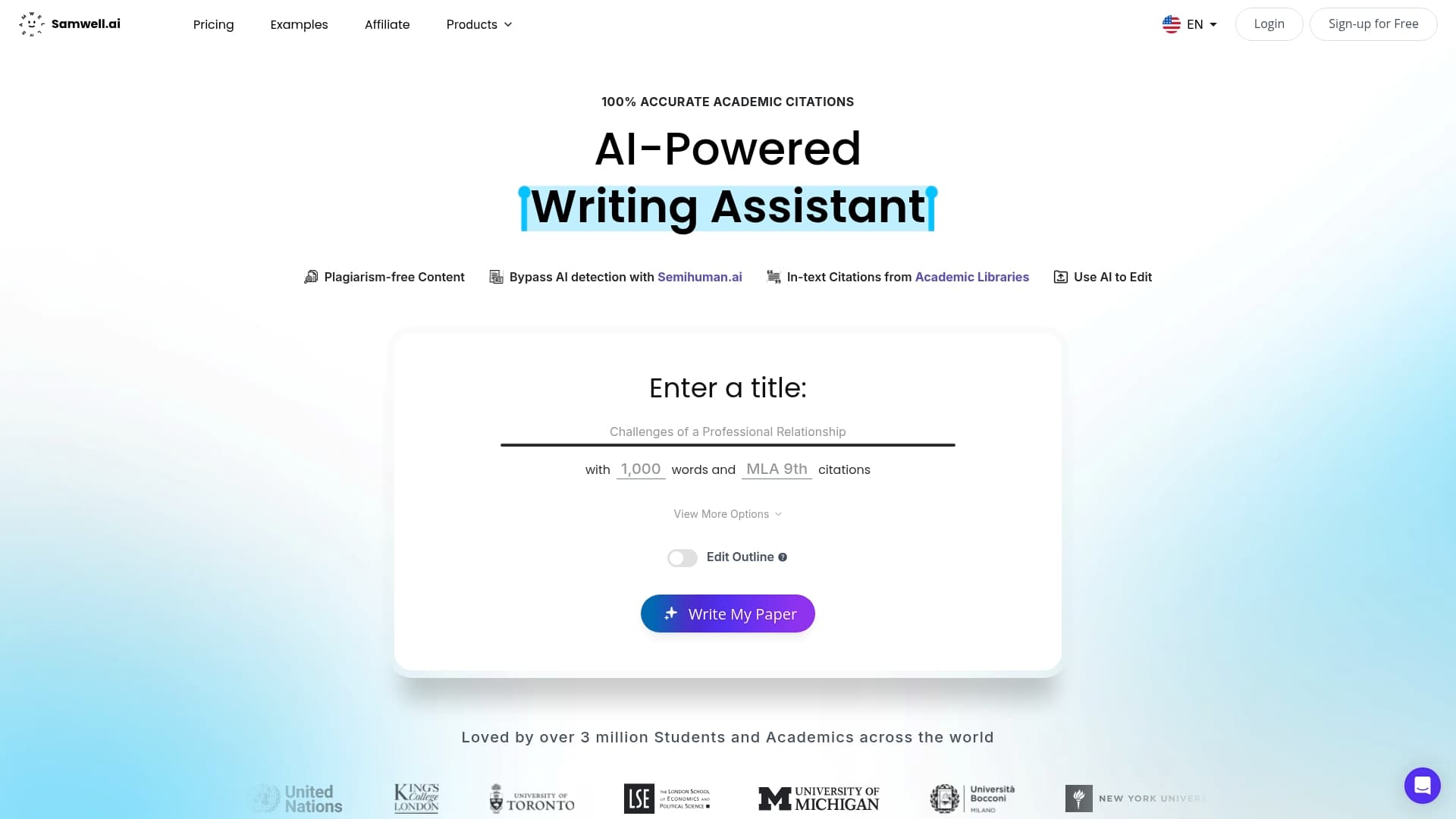
Experience how Samwell.ai’s AI-driven technology supports you through every stage of essay development. Whether you need help organizing complex ideas, refining your thesis, or ensuring a seamless transition between paragraphs, our platform helps save time while boosting confidence in your academic work. Don’t wait to elevate your essay with structured precision—start crafting your outline today at Samwell.ai and take control of your writing journey.
An essay outline serves as a roadmap for structuring an argument and organizing thoughts logically. It helps in identifying potential gaps in reasoning and facilitates smoother transitions between sections.
The main types of essay outlines include alphanumeric, full sentence, and decimal outlines. Each format uses a unique system to organize information effectively, depending on the essay's complexity and requirements.
Outlines help in mapping out the essay's structure, ensuring a clear organization of ideas, coherence between paragraphs, and that each section contributes meaningfully to the overall argument.
Common pitfalls include starting to write without a solid outline, having a weak thesis statement, and imbalanced argument development. Solutions involve thorough planning, refining the thesis, and ensuring even coverage of supporting points.